
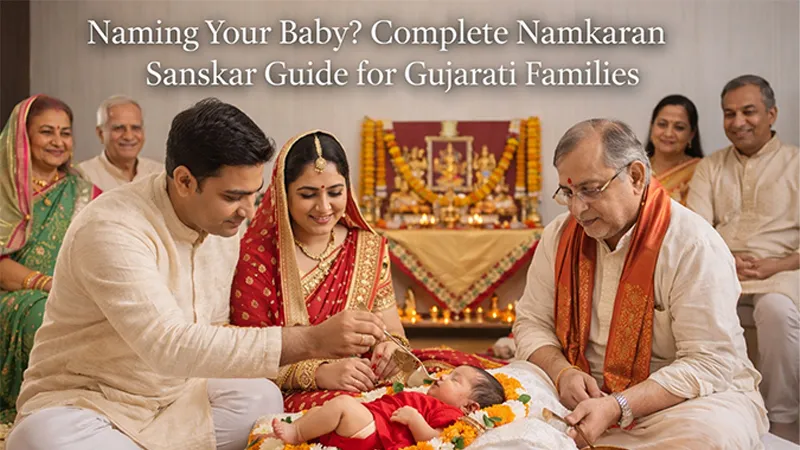
The birth of a child is a moment that is associated with the most emotional and significant events in the life of any family. This is a very good thing in Gujarati culture, and it is celebrated in a beautiful way, that is, Namkaran Sanskar, which is a holy infant baptism as mentioned in Vedic texts. Namkaran is not merely the process of assigning a name to the child but the linking of the child to planetary energies, family values and cultural origins. This step-by-step guide discusses the significance of Namkaran sanskar, the age when it should be performed, the naming process according to nakshatra, commonly used Gujarati baby names and meaning and a full checklist on the ceremony by families that are planning to have a traditional baby naming ceremony.
What Is Namkaran Sanskar and Why It Is Important
Namkaran Sanskar is a Hindu samskara that is one of the sixteen major ones that are conducted to formally name a child. Vedic belief suggests that a name has vibration, sound energy and meaning which affects the personality and the life journey of a child. Namkaran in the Gujarati families is carried out in a religious way with family involvement and blessing by older ones. A well-organized baby naming ceremony is an introduction of the child into society which is supposed to be a spiritual basis of the child development in the future. According to Pandit Chetan Purohit, Namkaran is also about tradition and about unifying the life path of the child with positive influences of the cosmos.
Best Age to Perform Namkaran Sanskar
Traditionally, Namkaran sanskar is conducted on the 11th, 12th or 21st day after birth, but others do it on the 40th day. The actual date will rely on the date of birth of child, family traditions and muhurat computation. Flexibility is typical in the contemporary Gujarati families, although muhurat choice is significant. Pandit Chetan Purohit defines an auspicious moment by using Panchang and horoscope of the baby which enables family to arrange a significant naming ceremony of the baby without tension.
How Baby Names Are Chosen Based on Nakshatra
Selection of name is based on nakshatra, which is one of the most significant issues of Namkaran sanskar. The nakshatra depends on the position of the moon at the time of birth of the baby and each nakshatra possesses syllables that are believed to have good naming powers. It is said that when these syllables are used to select a name, it will help to maintain emotional stability, confidence, and focus on life. Pandit Chetan Purohit takes his time to study the kundli to propose appropriate syllables and name choices that are a combination of astrology and family preferences. This approach renders Gujarati names to babies that mean something to be spiritually compatible and culturally significant.
Importance of Meaning in Gujarati Baby Names
The Gujarati family is very much concerned with names. The traditionally popular names are those derived based on virtues, nature, divine attributes, or good feelings. A baby name that has meaning in Gujarati is not just given due to its sound but its value. Pandit Chetan Purohit helps families to select names which are easy to pronounce, culturally based, meaning based, and aligned to nakshatra. Such moderate manners make the baby naming ceremony both a traditional and a practical one.
Popular Gujarati Baby Names with Meaning
Naming of babies in Gujarati is usually spiritual, positive and cultural. Most of the names are inspired by Lord Krishna, Goddess Durga, nature and moral values. The parents are also fond of names which sound contemporary but with traditional meaning. In Namkaran sanskar, families usually list down a few names and settle on one after the mantra chanting and blessings. Pandit Chetan Purohit assists this process with ensuring that a family goes through it with ease, by providing them with the names suggestions that are in tandem with the astrology as well as family customs.
Step-by-Step Namkaran Sanskar Vidhi
Ganesh Puja starts the baby naming ceremony, which eliminates barriers, and then there is Kalash Sthapana signifying the presence of God. To equate planetary effects, Navgraha Puja can be conducted. The pandit will then whisper the selected name over the ear of the baby chanting holy mantras. The child is named and the elder members congratulate the child, the prasad is given. Pandit Chetan Purohit takes each process one by one so that the family members can have an idea of the spiritual sense in the ritual and the namkaran sanskar is therefore an emotional satisfying process.
Complete Namkaran Ceremony Checklist
Minimal samagri needed to conduct a decent baby naming ceremony including Kalash, coconut, rice, flowers, kumkum, turmeric, diya, incense sticks, sweets and clean cloth to the baby. Cradle set up or decoration is also made by some families. Pandit Chetan Purohit offers an easy checklist beforehand to ensure that Gujarati families can organize a Namkaran sanskar and have more time to devote instead of do logistics.
Modern Home Ceremony vs Temple Ceremony
Nowadays, it is common to have Namkaran sanskar in a small-scale home setting by many families, where others choose to conduct temple rituals. Both alternatives are good if rituals are done properly. There is bonding of family members in home ceremonies and a sacred feeling in temple ceremonies. Pandit Chetan Purohit is the performer of Namkaran in houses and temples and leads families according to their comfort and custom.
Common Mistakes to Avoid During Namkaran
The most common mistakes are rushing the ceremony without considering muhurat, name selection without looking at syllables of nakshatra and considering a ritual to be a social goal. Namkaran sanskar is a spiritual practice and is not to be undertaken carelessly. Pandit Chetan Purohit assists families not to commit such mistakes with the help of appropriate guidance and ritual organization.
Why Choose Us
Pandit Chetan Purohit is popular among the Gujarati families and is trusted to perform a genuine and important ceremony of Namkaran. As a person with a substantial understanding of Vedic ceremonies, astrology, and the Gujarati customs, Pandit Chetan Purohit also offers a customized approach to naming ceremonies, nakshatra-based name selection, and full execution of ceremonies. His relaxed nature, ability to explain things clearly and respect tradition are valued by families. Pandit Chetan Purohit is a good teacher who can be relied upon when an individual requires assistance selecting Gujarati baby names with significance or when planning a complete baby naming ritual based on spiritual practice and cultural awareness.
Conclusion
Namkaran Sanskar is the religious landmark, which defines a child and spiritual base. This ritual is a combination of devotion, astrology and culture values to the Gujarati families making it an important celebration. Every step is important, and this is the process of choosing the appropriate age and muhurat, as well as the names with respect to nakshatra and meaning. Well conducted baby naming ceremony unites the family and introduces the child positively and with blessings. Namkaran sanskar is a diary to be remembered with proper guidance and traditional discipline and the experience is spiritually uplifting to the whole family.
Book Namkaran Ceremony with Pandit Chetan Purohit for traditional rituals and astrologically guided baby names. Call +91 9924635307 or email chetanpurohit2020@gmail.com today.
Key Takeaways
- NamKaran Sanskar is a religious ritual Vedic ceremony according to which a child is officially named and his or her identity is identified in accordance with spiritual and astrological concepts.
- The most auspicious moment to hold the baby naming ceremony is determined by muhurat and family tradition (which depends on the time of the year), and it is usually during the first few weeks, after birth.
- The naming is also important in the selection of auspicious syllables as the naming is done based on Nakshatra and thus the Gujarati baby names that carry a meaning are of a great significance that is spiritual and culturally wise.
- The Namkaran ceremony is done in a formal Vidhi and checklist whether at home or in a temple.
- Gujarati families rely on Pandit Chetan Purohit to provide personalized advice, traditional ceremonies, and the right choice of baby names.