
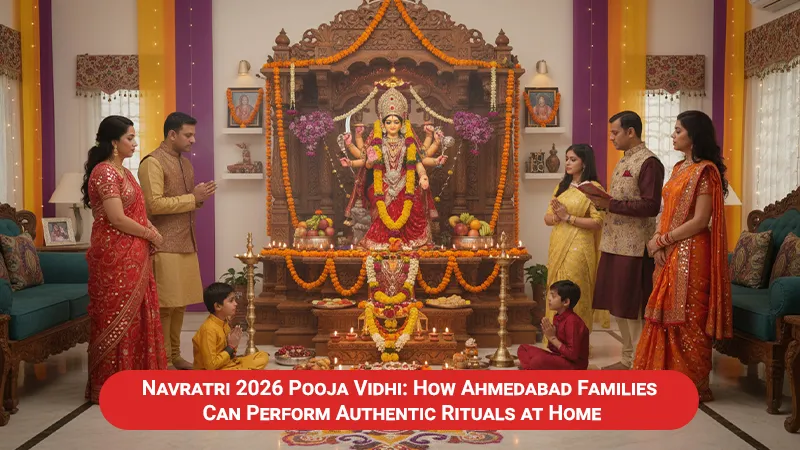
One of the most spiritually powerful festivals as well as culturally vibrant in India is Navratri and Ahmedabad pays unparalleled devotion and vigor. Although Garba nights and community events are very common, the main spirit of Navratri is in the day-to-day worship, discipline and devotion to Maa Durga. Navratri pooja vidhi is a must to be known by those families who wish to observe the tradition in the correct way. It is a comprehensive manual to help Ahmedabad families host their own authentic rituals during Navratri 2026, a day-by-day pooja guide, rules of fasting, popular Garba culture and clear information of whether to perform Durga pooja at home or not and employ a pandit.
Spiritual Importance of Navratri in Ahmedabad
Navratri represents the triumph of divine force over the evil forces. Every single day, nine days are devoted to another type of Goddess Durga, who embodies power, wisdom, protection, and compassion. In Gujarat and mostly in Ahmedabad, celebration of Navratri in Ahmedabad is a perfect blend of both devotion and culture. Keeping a holy rhythm during the festival, families start the day with prayers and end it with Garba. It is believed that the Durga pooja that is carried out at home during the Navratri makes the family stronger regarding spirituality and attracts lots of positive energy to the home.
Why Proper Navratri Pooja Vidhi Matters in 2026
The proper Navratri pooja vidhi is a way to remain spiritually purified and centered during the nine days. The rituals will be aimed at instilling discipline, gratitude, and inner strength. In Navratri 2026, the families will embark on a well-organized but realistic pooja ritual that will meet the current lifestyles without necessarily violating the tradition. Pandit Chetan Purohit teaches Ahmedabad families on a regular basis to conduct simplified and yet authentic Navratri rituals at home.
Day-by-Day Navratri Pooja Guide
Every day Navratri is devoted to a certain incarnation of Maa Durga, and the worship in the form of knowledge brings a sense in the rituals. The first day is dedicated to Shail Putri which means purity and strength. The second one is the celebration of Brahmacharini which means penance and devotion. Chandra Ghanta is a brave and protective deity worshiped the third day. On the fourth day, there is Kush Manda, the one that is supposed to revitalize the universe. The fifth day celebrates Skanda Mata who represents motherhood. The sixth day is devoted to Katyayani, or the symbol of courage. The seventh day is the day of worship of Kalaratri, the fierce protector. On the eighth day, Mahagauri is celebrated and Mahagauri represents peace and purity. The ninth day venerates the day Siddhidatri which is the provider of spiritual satiety. Families that adhere to Navratri pooja vidhi practiced at home normally recite mantras, put up lamps, flowers, and keep things tidy within these nine days.
Navratri Colors and Their Significance
There is a traditional color of each Navratri day which is an expression of energy of a goddess that day. The colors are said to bring unity and positivity when they are put on during worship and celebrations. In Navratri celebration Ahmedabad, a lot of families observe color traditions in their home and in Garba nights as well. Pandit Chetan Purohit describes that colors are related with symbolic value, however, sincerity in the home Durga pooja has more spiritual value.
Fasting Rules During Navratri
Fasting forms an aspect of Navratri and is a sign of self-control and piety. The families practice complete fasting as others engage in partial fasting based on their state of health and age. Fruits, milk, sabudana, peanuts and vrat flour products are some of the common vrat foods. The fasting process is used to sustain spiritual concentration during the Navratri pooja vidhi. Pandit Chetan Purohit offers advice in the family to practice fasting in a spiritual way but comfortable to the body.
How to Set Up Navratri Pooja at Home
To perform Durga pooja at home the family must select an area that is clean and quiet. The Maa Durga idol or picture is positioned to the east or north with a kalash (symbol of divine power). The offerings that are done daily are flowers, incense, diya, and prasad. The families in Ahmedabad tend to maintain the arrangement plain and simple and lay more emphasis on the devotion rather than the decoration.
Navratri Celebration and Garba Culture in Ahmedabad
Garba and Dandiya are the most recognized international events of Navratri celebration Ahmedabad. Such popular locations are community grounds, cultural clubs, and residential societies. Although Garba is a form of joyful devotion, families are provided with the practice of completing the daily pooja rituals and then going out to have fun at night. Spiritual balance is achieved when the worship and celebration are combined, which is stressed by Pandit Chetan Purohit.
Performing Pooja at Home vs Hiring a Pandit
Most families are confused about whether they should do pooja or get a pandit. Personal devotion and family bonding are enhanced by doing Durga pooja at home. Nevertheless, a pandit is hired to assist in proper pronunciation of mantras, proper sequence of rituals, and time discipline. Pandit Chetan Purohit provides an adaptable Navratri pooja system where families will not lose touch with the ritual during guidance.
Common Mistakes to Avoid During Navratri Pooja
During the observance of Navratri pooja Vidhi, families usually commit minor errors in ignorance. Poor pooja times, wrong pronunciation of mantras, omission of lighting diya, and attention on Garba and omission of house Durga pooja are some of the frequent problems. Another common error is the mixing of non-vrat food on the fasting days. Pandit Chetan Purohit in Navratri celebration Ahmedabad provides families with ways through which they can be balanced and simple thus the spiritual spirit of Navratri is not lost.
Why Choose Us
Families of Ahmedabad resort to Pandit Chetan Purohit due to his genuine Vedic practices and spiritual leadership. Being well versed in scriptures and giving experience, Pandit Chetan Purohit assists the families to observe correct Navratri pooja vidhi in a simple and purposeful way. His philosophy is based on reduction, piety and customs instead of haste rituals. Families trust Pandit Chetan Purohit to provide them with respect and proper rituals and reliable services during Navratri celebration Ahmedabad, whether they can do Durga pooja at home or take the services of pandits
Conclusion
Navratri 2026 provides families in Ahmedabad with a good chance to revisit in devotion, discipline, and tradition. Through proper Navratri pooja vidhi, awareness of daily goddesses’ worship, observance of fasting and a balanced celebration and rituals, families can observe Navratri in the spiritual way it is meant to be observed. Visiting Durga pooja at home or under the guidance, the purity of heart is the center of worship. When prepared carefully with sincere advice, Navratri turns out to be a life-changing experience to the whole family.
Book Navratri Pooja Service with Pandit Chetan Purohit for authentic home rituals and guided worship. Call +91 9924635307 or email chetanpurohit2020@gmail.com to plan Navratri 2026.
Key Takeaways
- Navratri 2026 is an opportune moment through which Ahmedabad families can reconnect with the devotion by adhering to the proper Navratri pooja vidhi at home.
- The day-by-day worship technique makes families cognizant of the importance of every type of Maa Durga and conduct rituals in a meaningful manner.
- When performed with honesty and plainness, Durga pooja at home enhances family harmony, spiritual orientation, and cultural principles.
- Navratri festival Ahmedabad is a combination of devotion and Garba culture and balancing between rites and festival would protect spirituality.
- Pandit Chetan Purohit is relied upon as a source of genuine guidance, proper rituals and customized services to the families that are offering Navratri pooja at home.